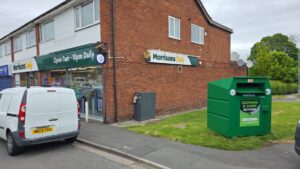
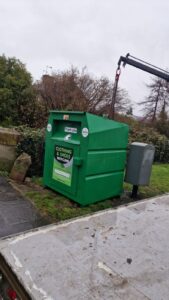
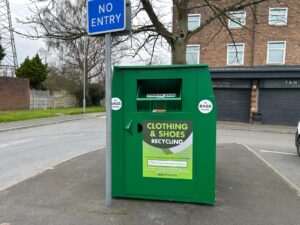
140 Earle St, Newton-le-Willows
WA12 9NU


Recycle Your Clothing in
Newton-Le-Willows
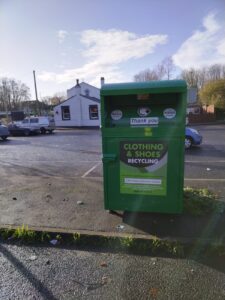
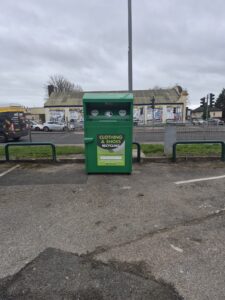
St Helens Borough Council official clothing recycling bank, serviced by the award-winning Roberts Recycling. Recycle your clean clothing and footwear here in Newton-le-Willows.
View map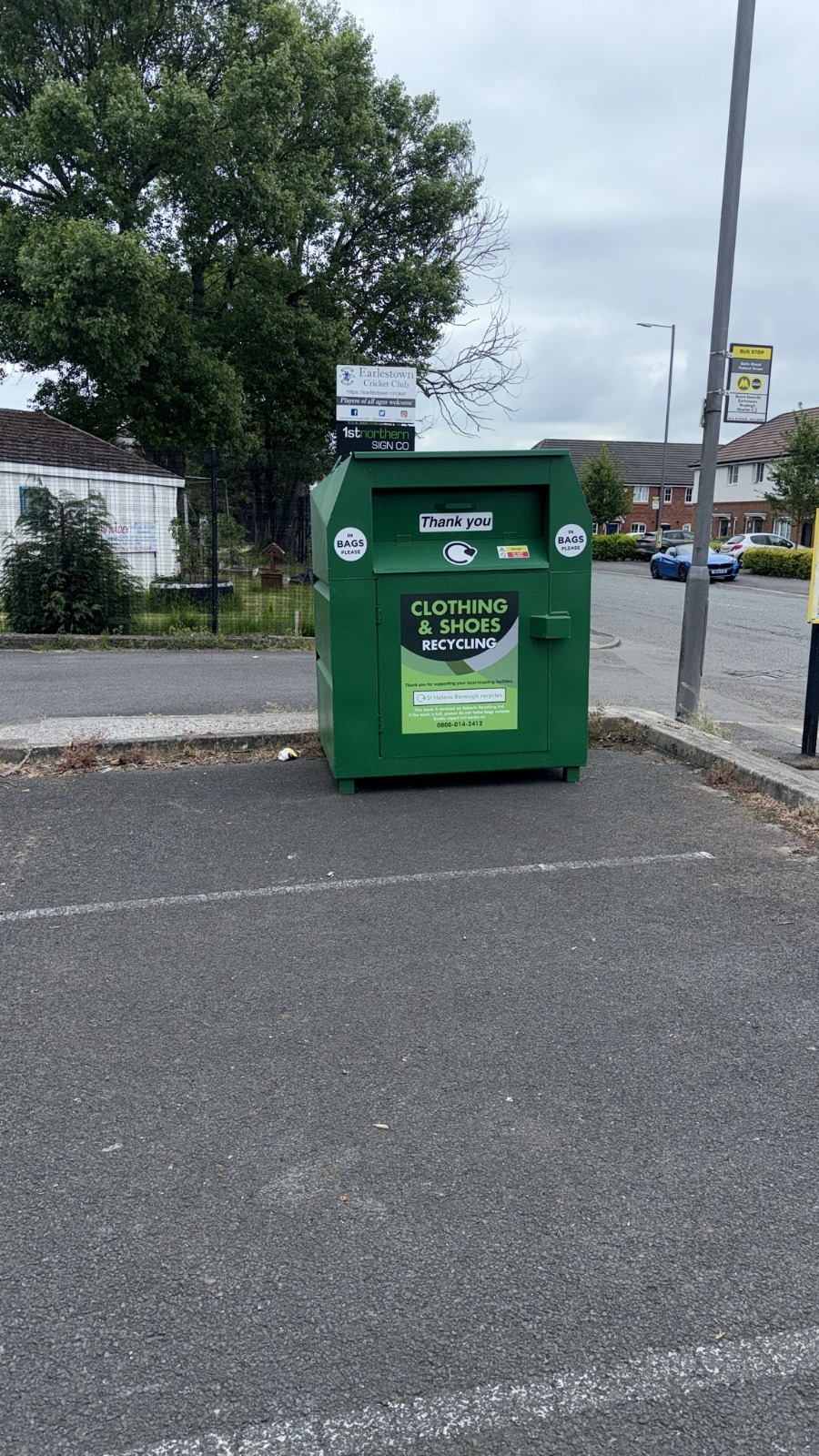
Please donate clean, dry items, bagged in any household carrier or bin liner.
Clean, dry items, bagged in any household carrier or bin liner, including:
Adult and children’s clean clothing:
Shirts, Trousers, Shorts, Tops, Jackets, Jeans, Jumpers, Hoodies, Polos, Joggers, Gloves, New Clothes, Skirts, Dresses, Jewellery, Swimwear, Paired Shoes, Trainers, Boots, Handbags, Belts, Ties, Accessories, Clean Bedding, Clean Towels.
Soiled, wet, ripped, odorous, heavily worn, stained, mouldy clothing and textiles:
Duvets, Pillows, Throws, Mattresses, Rugs, Carpets, Electricals, Furnishings, Workwear,
Protective Gear, PPE, Work Uniform, Underwear & Socks (unless new or with tags), Fabric Offcuts or Scraps, Bath Robes, Slippers, School Uniform, Soft or Hard Toys / Teddies, Books.
Textiles diverted from landfill
Since 2025
All time
CO2 emissions avoided
Since 2025
How is CO2E calculated?
All time
All St Helens Borough Recycles sites
Since 2025
All time

Please send us a photo of the full textile bank and we'll arrange a collection as soon as possible!

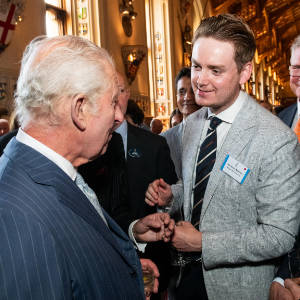
Roberts Group International was established in 2009 and are now one the UK’s leading sustainable textile recyclers and processors, with a core mission of diverting waste clothing and textiles from landfill.
In 2025, we were honoured to win The King’s Award for Enterprise for the third time. This national honour, with formal approval by the Prime Minister and His Majesty The King, recognises our commitment and global impact in textile reuse and recycling.
Working in partnership with: